


Cats have a reputation for taking care of themselves. They find the cool tiles, they nap through the hottest part of the day, and they seem above whatever is happening around them. That self-sufficiency is part of why cat heatstroke is so easy to miss. They don’t tend to show obvious distress until things are already serious.
Ottawa summers can get uncomfortably hot. A cat in a poorly ventilated room, a sunroom that traps heat, or a parked car for even a few minutes is at real risk. Here’s what it actually looks like when a cat is struggling with the heat.
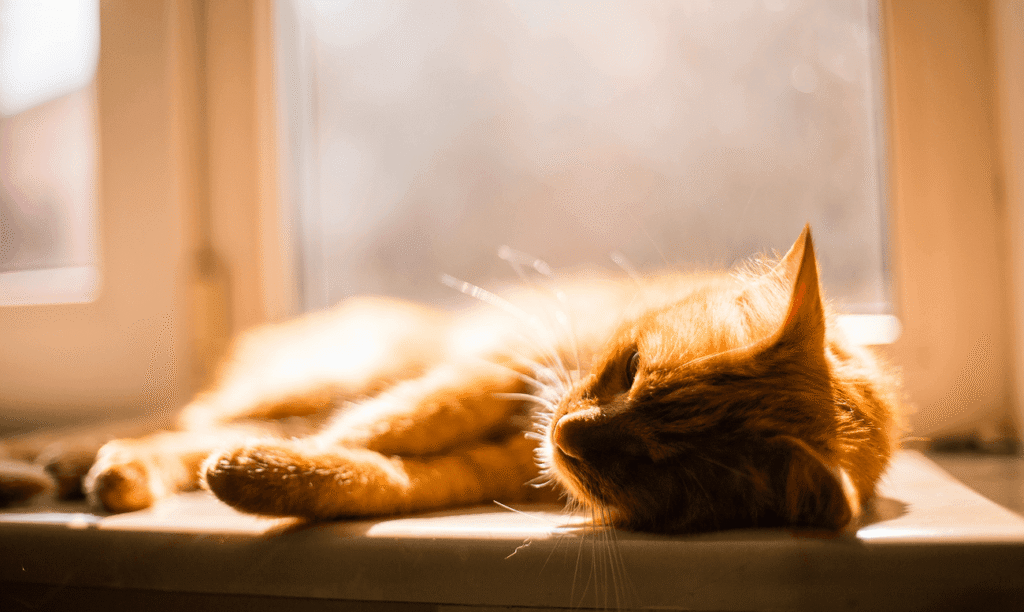
Why are cats vulnerable to overheating
Cats can’t sweat through their skin the way humans can. They lose heat through their paw pads and through grooming. The evaporation of saliva from their coat provides some cooling, which is why you’ll often see a hot cat licking themselves more than usual. It’s a pretty limited system compared to what the Ottawa summer can throw at them.
Panting in cats is not normal. Unlike dogs, cats don’t pant as a routine cooling mechanism. When a cat is panting, something is wrong. That’s one of the most important things to know — seeing a cat breathing with its mouth open is always a reason to act, not to wait and see.
The cats most at risk are flat-faced breeds (Persians, Exotic Shorthairs, Himalayans, whose shortened airways make heat regulation even less efficient), overweight cats, elderly cats, and any cat with existing heart or respiratory conditions.
The early signs of overheating in cats
These are subtle, and they’ll look a lot like a cat just having a lazy afternoon. But in context — on a hot day, in a room without airflow — they matter:
- Seeking out unusual cool spots: floor tiles, the bathroom, corners they don’t normally go to
- Lying completely flat and stretched out, rather than curled
- Grooming more than usual
- Restlessness, then sudden stillness
- Slightly reduced interest in food or water
On their own, these aren’t alarming. Combined with a hot environment, they’re worth taking seriously.
The obvious warning signs
These mean something is genuinely wrong:
- Panting or open-mouth breathing — in cats, this is always a red flag
- Drooling or excessive salivation
- Bright red gums, or pale/white gums
- Vomiting
- Muscle tremors or twitching
- Stumbling, staggering, or apparent confusion
- Rapid heartbeat
- Collapse or unresponsiveness
If your cat is panting and lethargic on a hot day, that’s enough. Don’t wait for more signs to develop.
What to do if your cat is overheated
- Move them to a cool, well-ventilated space.
- Offer small amounts of cool (not cold) water, but don’t force it.
- Apply cool damp cloths to the neck, armpits, and paw pads. Don’t wrap them in a wet towel — it traps heat. Don’t use ice or ice-cold water. The shock of rapid surface cooling causes blood vessels to constrict, which actually slows the cooling of the core. Cool and steady is better than cold and fast.
- Get to urgent care even if your cat seems to stabilize. Heatstroke affects multiple organ systems and a cat that appears to recover on its own may still have internal damage that needs assessment.
How to prevent overheating in cats
Make sure indoor cats always have access to a cool room with airflow on hot days. Don’t close them in sunrooms or rooms without ventilation during an Ottawa heat wave. Fresh water should always be available. Consider a pet fountain, which encourages cats to drink more than a standing bowl. Draw curtains or blinds during peak afternoon heat to keep rooms cooler. And check on cats that tend to hide, especially elderly cats or flat-faced breeds, during hot spells.
Never leave a cat in a parked car. Not for a quick errand. Not with the windows cracked. Temperatures inside a parked car on a warm Ottawa day can reach dangerous levels within minutes.
FAQ
How hot is too hot for an indoor cat?
When indoor temperatures exceed 30°C, cats may struggle. Above 35°C in a poorly ventilated space is genuinely dangerous, particularly for flat-faced breeds and seniors. The problem is that many of Ottawa’s older homes can hit those temperatures in a heat wave without central air.
My cat seems to pant occasionally. Is that normal?
Cats do not normally pant. If your cat pants regularly, not just in a hot car or after a stressful vet visit, that’s worth discussing with a vet regardless of the season. It can signal underlying heart or respiratory disease. In the context of summer heat, any panting is a reason for concern.
What’s the difference between a cat being hot and having heatstroke?
A hot cat seeks cool spots and may groom more, but is alert, interested in water, and has pink, moist gums. A cat with heatstroke may pant, drool, be weak or confused, and won’t improve on its own without intervention. If you’re not sure which one you’re looking at, come in.
Can I give my cat something to help cool them down?
Cool water and moving them to a cool space are the appropriate first steps. Don’t give any medications! Many human products, and even some pet products, are specifically dangerous for cats. Get veterinary care rather than experimenting.
Cat showing signs of overheating?
Get to Galaxy Vets Urgent Care & Walk-In : Ottawa right away. Open daily noon to midnight at 21 Jamie Avenue.