


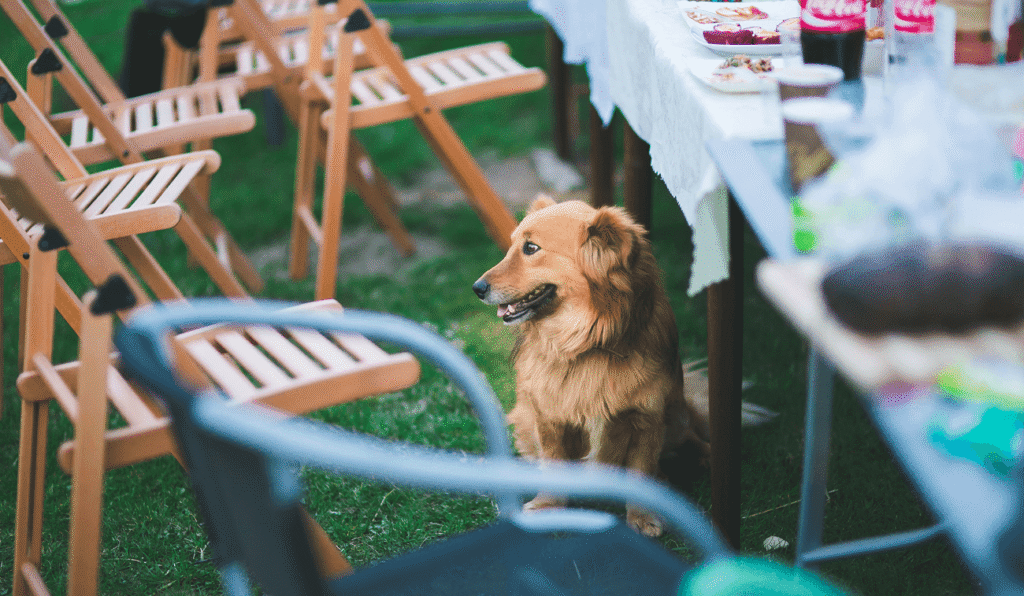
Every summer, without fail, we see a spike in pets coming in after getting into something at a cookout. A corn cob from the trash. A grape that rolled off the fruit salad bowl. A burger that fell off the grill and disappeared before anyone could grab it.
Dogs at BBQs are persistent, opportunistic, and fast. And a lot of what ends up on a summer table is more dangerous for them than most people realize. Here’s what to keep away from them and what to do if you’re too late.
Corn cobs
The corn itself isn’t the issue. It’s the cob. Dogs love the smell and the buttery residue, and they’ll swallow pieces or the whole thing before you’ve noticed they’ve even got hold of it. Corn cob doesn’t digest. It lodges in the intestine and stays there, and surgery is frequently the only way to fix it.
The signs of a blockage can take hours to appear after ingestion:
- repetitive vomiting
- loss of appetite
- a dog that’s clearly uncomfortable but you’re not sure why
If you know or even suspect your dog got a corn cob, come in before symptoms develop. Early intervention can sometimes avoid surgery. Waiting can’t.
Grapes and raisins
This one has an unpredictability that makes it particularly alarming. Even a small number of grapes can cause acute kidney failure in some dogs, and there’s no reliable way to predict which dogs are sensitive. Some appear to eat grapes repeatedly without obvious harm. Others develop kidney failure from a handful. There’s no established safe dose.
The early signs (vomiting, lethargy) are easy to overlook. The serious signs of kidney failure show up 24 to 48 hours later, by which point significant damage has already occurred. If your dog ate grapes, even a few, even hours ago, come in. Don’t wait to see how they feel tomorrow.
Raisins are dried grapes, which means they’re more concentrated. Same risk, smaller volume needed. Watch for them in trail mix, oatmeal cookies, scones, and granola.
Onions and garlic
These are in almost everything at a cookout: marinades, potato salad, burger toppings, and sauces. All members of the allium family damage red blood cells in both dogs and cats, leading to a form of anemia where the body destroys its own blood cells.
What makes this tricky is that symptoms are often delayed by several days. Your pet can seem completely fine the night of the BBQ and show pale gums, lethargy, and weakness days later. Small amounts consumed repeatedly also add up over time. Cats are more sensitive than dogs and need a call regardless of how little they ate.
Cooked bones
Raw bones are given to dogs intentionally by some owners. Cooked bones are a different story. Cooking changes the structure of bone, making it prone to splintering into sharp fragments that can puncture the esophagus, stomach, or intestines. A dog that seems to have swallowed a chicken bone without issue can develop internal injuries hours later. Watch for gagging, pawing at the mouth, drooling, vomiting with blood, or sudden abdominal pain.
Alcohol
Beer left in an unattended cup. Wine within reach. Alcohol in a sauce or dessert. Dogs and cats metabolize alcohol far faster than we do, and serious toxicity can develop from surprisingly small amounts. Vomiting, disorientation, low blood sugar, tremors, and, in severe cases, respiratory failure. If you think your pet got into alcohol, don’t assume it was too little to matter.
Xylitol
If there are sugar-free drinks, condiments, or baked goods at the cookout, check the label for xylitol. It’s an artificial sweetener that causes a rapid drop in blood sugar in dogs and can lead to liver failure. It’s fast. Symptoms can appear within 30 minutes. It’s also in some peanut butters, which makes it worth knowing before you give a dog a spoonful as a treat.
What to do if your pet got into something
Identify what they ate and approximately how much. Note the time. Come in, or at minimum, call. With toxin ingestion, earlier intervention means more treatment options and better outcomes. Don’t try to induce vomiting at home unless a vet specifically tells you to. For some toxins, it makes things worse.
And don’t wait for your pet to seem sick before acting. The whole problem with a lot of these toxins is that the window where you can do the most good is before symptoms appear.
FAQ
My dog ate a little bit of onion. Is that actually serious?
A tiny amount in a large dog is unlikely to cause acute illness on its own, but it’s worth monitoring. Repeated small exposures add up. For cats, call regardless of the amount — they’re more sensitive.
What if my dog ate grapes hours ago and seems completely fine?
Come in anyway. Grape toxicity causes kidney damage that isn’t apparent for 24 to 48 hours. Feeling fine now doesn’t mean the kidneys are fine. It’s safest to induce vomiting and get the grapes, then leave them to cause issues.
Can my cat eat plain grilled meat?
Plain, unseasoned cooked meat in small amounts is generally fine. The problem is that most BBQ meat is marinated, spiced, or cooked alongside onions and garlic. It’s simpler to keep cats away from grilled food altogether and give them something you know is safe.
Are there any cookout foods that are actually safe for dogs?
Plain, well-cooked chicken or beef with no seasoning, in small amounts, is fine. Raw carrots, cucumber, watermelon (no rind or seeds). Bring some dog-appropriate treats and let those be their cookout food — it’s much easier than supervising every plate.
Think your pet got into something at the cookout?
Don’t wait to see how they feel. Walk in to Galaxy Vets Urgent Care & Walk-In: Ottawa. Ppen noon to midnight, 7 days a week.